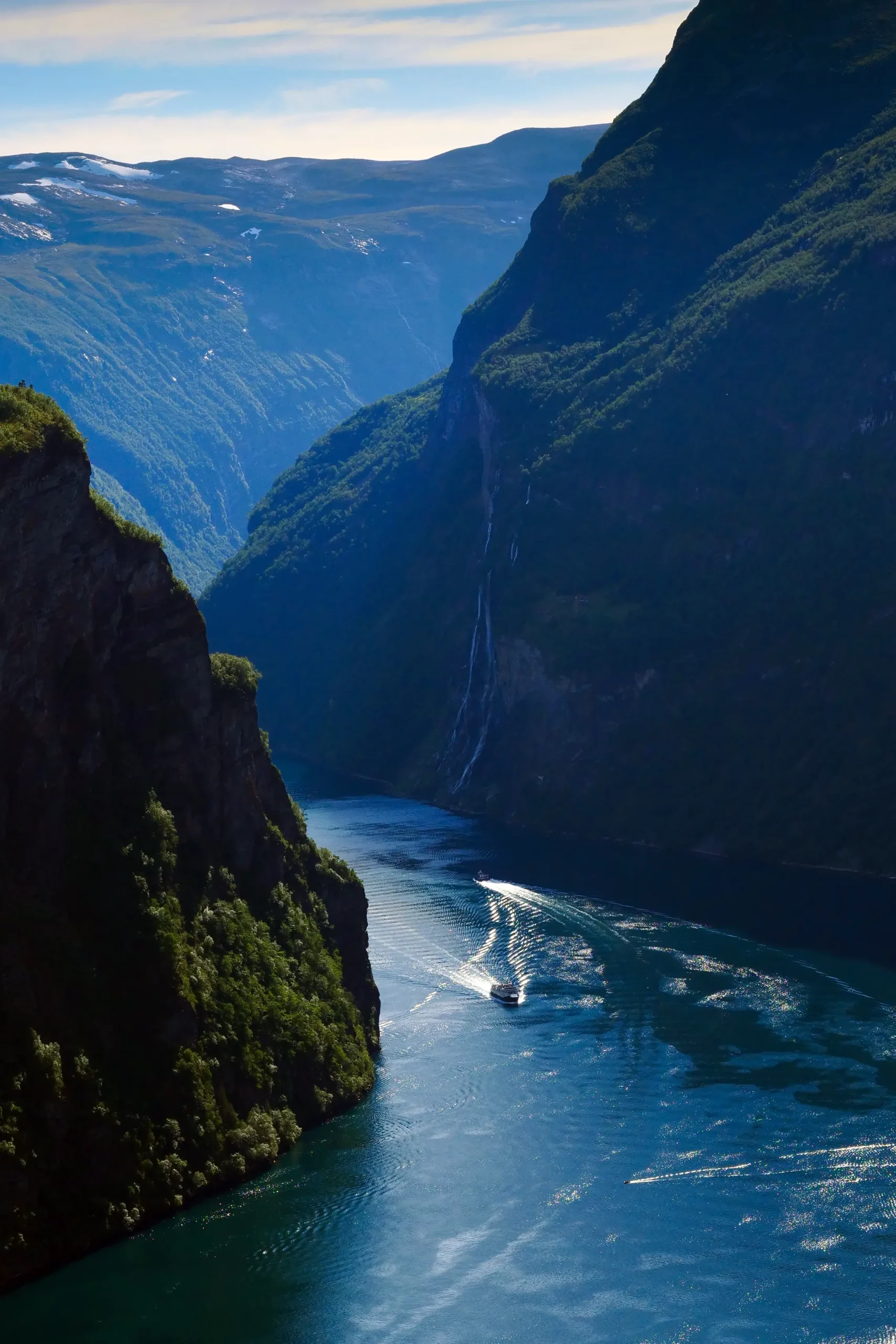


Geirangerfjord is recognized as one of Norway’s most distinguished natural landmarks and is inscribed on the UNESCO World Heritage List for its exceptional geological and scenic value. This fjord is characterized by its narrow, elongated shape and the dramatic vertical cliffs that rise several hundred meters above the water. Their imposing scale creates a unique spatial impression, evoking the atmosphere of a vast natural amphitheater. The water surface is notably deep and consistently calm, enhancing the mirror‑like reflections of the surrounding mountain formations.
The slopes of the fjord display a wide range of natural features, from dense green vegetation during the summer months to snow‑covered expanses in winter. Scattered along these steep inclines are historic farmsteads, which serve as evidence of traditional settlement patterns and the remarkable adaptability of local communities to challenging environmental conditions. Among the most prominent elements of the landscape are the waterfalls, which have become symbolic attributes of Geirangerfjord. “The Seven Sisters,” “The Suitor,” and “The Bridal Veil” are not only visually striking but also hold cultural significance, each associated with its own narrative and identity. Their cascading streams generate a distinctive acoustic environment and contribute to a microclimate marked by increased humidity.
Travel through the fjord offers extensive opportunities to observe natural processes and the geomorphological structure of the region. Variations in lighting throughout the day significantly influence the perception of the landscape: morning mist softens the contours, midday sunlight highlights the rugged relief, and evening tones create expressive color transitions across the cliffs and water. These dynamic visual changes make Geirangerfjord a subject of continuous scientific interest and a highly valued destination for visitors.
Geirangerfjord represents a harmonious interplay of natural forces, historical heritage, and aesthetic appeal. Its significance extends beyond tourism, forming an essential component of Norway’s cultural and environmental legacy.