

Kauai is the oldest and most naturally untouched of the major Hawaiian Islands, shaped by millions of years of erosion, volcanic activity, and dense tropical growth. Often called the Garden Isle, it is defined by deep valleys, dramatic cliffs, rain‑soaked mountains, and lush forests that create an atmosphere of ancient, unspoiled wilderness.
General Character of Kauai’s Nature
The island’s landscape feels both rugged and vibrant. Misty highlands, sharp ridges, and thick vegetation dominate much of the terrain. Its age has allowed the land to weather into canyons, waterfalls, and intricate coastal formations that distinguish it from the younger Hawaiian islands.
Key Natural Regions
Nā Pali Coast
This coastline features towering emerald cliffs rising directly from the ocean, carved by narrow valleys and lined with waterfalls. Its inaccessibility by road helps preserve its pristine condition and sense of isolation.
Waimea Canyon
Known as the “Grand Canyon of the Pacific,” Waimea Canyon displays deep gorges, layered red and orange rock, and sweeping vistas. It is one of Kauai’s most dramatic geological features.
Interior Valleys and Mountains
The island’s interior includes rainforests, high plateaus, and bogs. Mount Waiʻaleʻale, one of the rainiest places on Earth, feeds countless streams and waterfalls, creating habitats for rare native plants and birds.
Climate and Vegetation
Kauai receives heavy rainfall, especially in its central mountains. This supports dense tropical forests, ferns, vines, and a wide variety of endemic species found nowhere else.
Wildlife
Before human arrival, Kauai had no land mammals, so birds became the dominant wildlife. The island hosts rare Hawaiian forest birds, seabirds, and unique freshwater species. Historically, it was also home to unusual now‑extinct species such as the moa‑nalo, a large flightless duck.
The Green Anole on Kauai
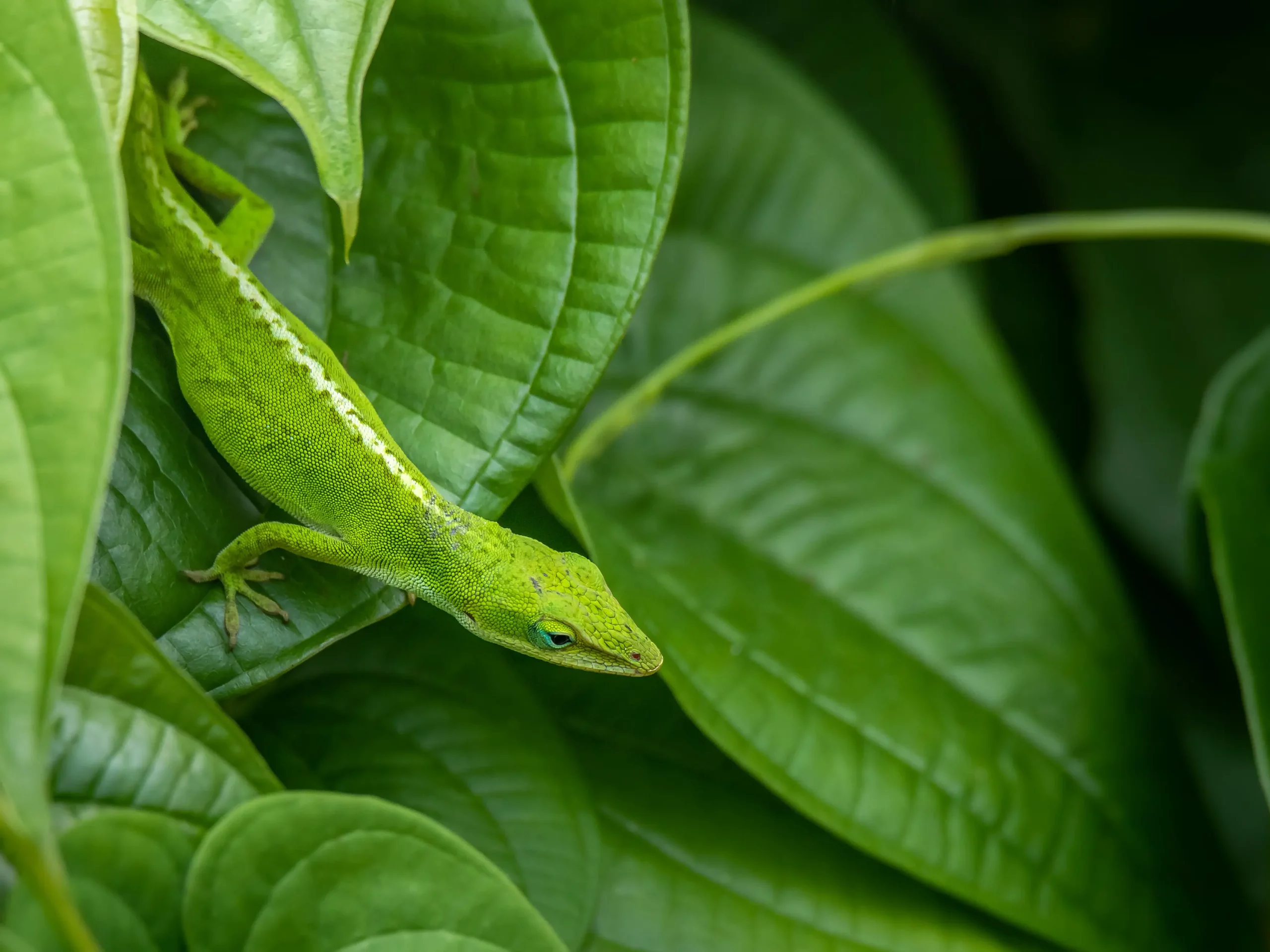
The green anole (Anolis carolinensis) is a small, agile lizard that has become a familiar sight in many parts of Kauai. Although not native to Hawaii, it has adapted well to the island’s warm, humid environment. Green anoles are often seen on tree trunks, fences, and vegetation, where they hunt insects and display their bright pink throat fan during territorial or mating behavior. Their presence adds a subtle but noticeable layer to the island’s modern ecosystem, especially in residential and forest‑edge areas.
Coastlines and Beaches
Kauai’s shoreline includes white‑sand beaches, coral reefs, and rugged cliffs. Hanalei Bay and the northern coast are especially scenic, framed by mist‑covered mountains and broad, curved beaches.
If you want, I can integrate more details about other introduced species, native wildlife, or how the green anole interacts with Kauai’s ecosystems.