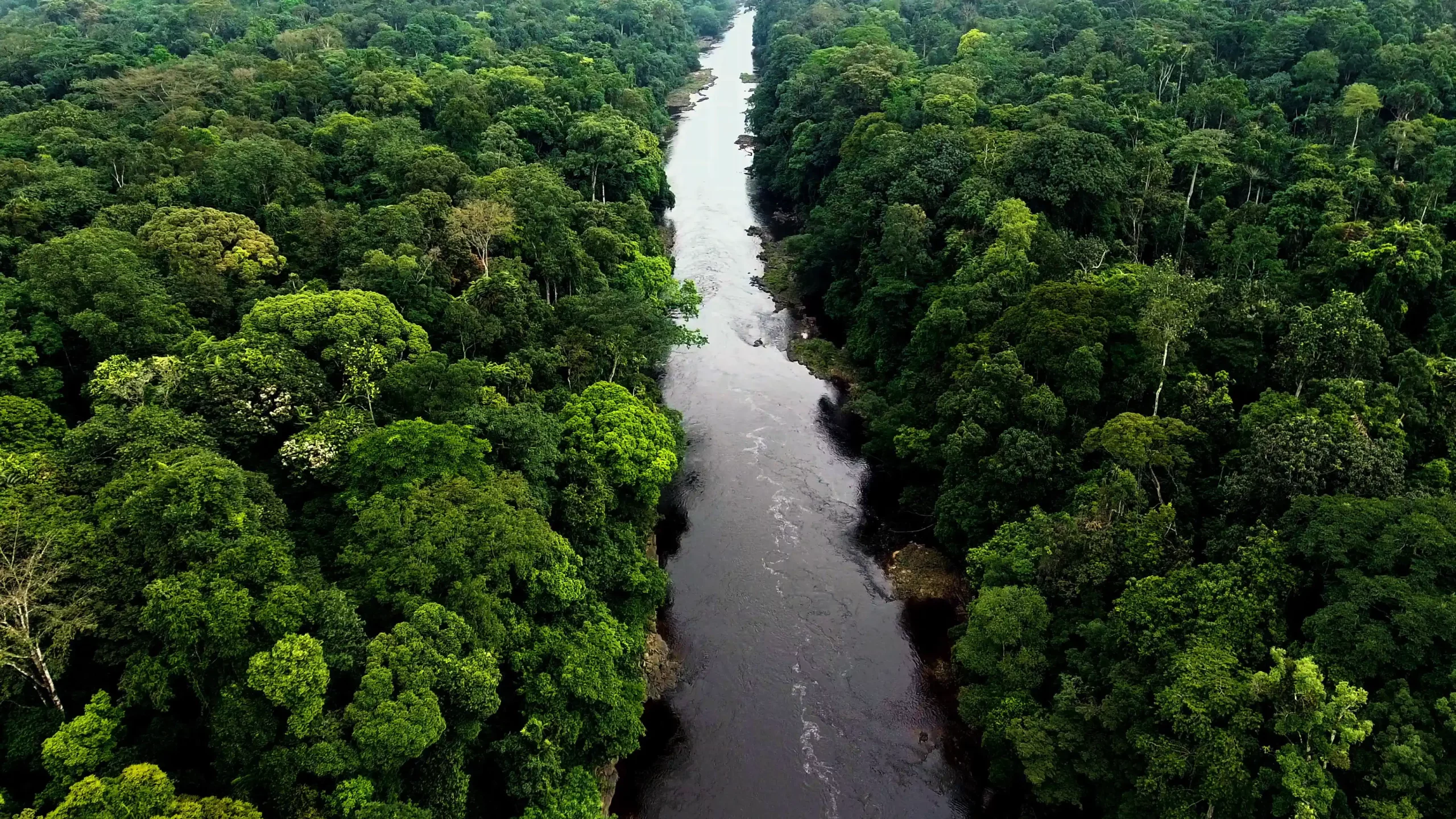


Overview of Central Africa’s Natural Environment
Central Africa encompasses some of the most ecologically significant landscapes on Earth. The region includes the Democratic Republic of the Congo, Cameroon, Gabon, the Republic of the Congo, Equatorial Guinea, and the Central African Republic. Its environment is shaped by vast rainforests, extensive river systems, savannas, wetlands, and volcanic highlands. Together, these ecosystems form one of the planet’s largest continuous wilderness areas.
Geographic Scale and Key Statistics
- Total area of the Congo Basin: approximately 3.7 million km²
- Congo River length: about 4,700 km
- Rainforest coverage: more than 1.8 million km²
- Estimated carbon stored in regional peatlands: ~30 billion tons
- Average annual rainfall in rainforest zones: 1,500–2,000 mm
- Average temperature: 24–27°C
Major Ecosystems of Central Africa
1. Tropical Rainforests
The Congo Basin rainforest is the second-largest tropical rainforest in the world after the Amazon.
Key characteristics:
- Around 10,000 plant species, including many hardwood trees
- Canopy height often reaches 30–50 meters
- Stores roughly 8% of global forest carbon
- Home to numerous endemic species, including the okapi and bonobo
2. Savannas and Woodlands
These ecosystems form transitional zones between dense forests and drier regions.
Features include:
- Seasonal rainfall patterns
- Tall grasses and scattered acacia trees
- Habitat for antelopes, buffalo, and predators such as leopards
3. Wetlands, Swamps, and Peatlands
Central Africa contains some of the world’s most extensive tropical wetlands.
Notable areas:
- The Cuvette Centrale, a massive peatland complex
- Flooded forests along the Congo River
- Rich aquatic biodiversity, including fish, amphibians, and reptiles
4. Volcanic Highlands and Mountain Ranges
The western edge of the region is dominated by volcanic landscapes.
Key features:
- The Virunga Mountains, containing several active volcanoes
- Elevations exceeding 4,000 meters
- Mist-covered slopes that support mountain gorillas and unique alpine vegetation
Rivers and Hydrological Systems
The Congo River
The Congo River is the lifeline of Central Africa.
Important facts:
- Second-largest river in the world by discharge
- Basin supports millions of people through fishing, transport, and agriculture
- Contains rapids, deep channels, and vast floodplains
Tributaries and Wetland Networks
- Major tributaries include the Ubangi, Sangha, and Kasai rivers
- Wetlands serve as breeding grounds for fish and migratory birds
- Seasonal flooding enriches soils and sustains local agriculture
Biodiversity and Wildlife
Species Richness
- Mammal species: over 400
- Bird species: more than 1,000
- Reptile and amphibian species: hundreds, many still undocumented
- Endemic species: approximately 300 across plants and animals
Iconic Animals
- Mountain gorilla (population around 1,000)
- Forest elephant (population roughly 100,000, declining)
- Okapi (found only in the DRC)
- Bonobo (endemic to the Congo Basin)
Climate Characteristics
Central Africa’s climate is predominantly equatorial.
Key features:
- High humidity and stable temperatures
- Two rainy seasons in many regions
- Frequent thunderstorms and heavy cloud cover
- Strong influence of the Intertropical Convergence Zone
Environmental Importance
Central Africa plays a crucial role in global ecological stability.
- The Congo Basin acts as a major carbon sink, slowing climate change
- Rainforests regulate regional rainfall patterns
- Wetlands store vast amounts of carbon and support biodiversity
- Rivers provide essential resources for millions of people
Conclusion
Central Africa’s natural environment is a complex mosaic of rainforests, savannas, wetlands, and volcanic mountains. Its ecosystems support extraordinary biodiversity and play a vital role in global climate regulation. Despite increasing environmental pressures, the region remains one of the world’s most important natural strongholds, offering a glimpse into Earth’s ancient ecological heritage.