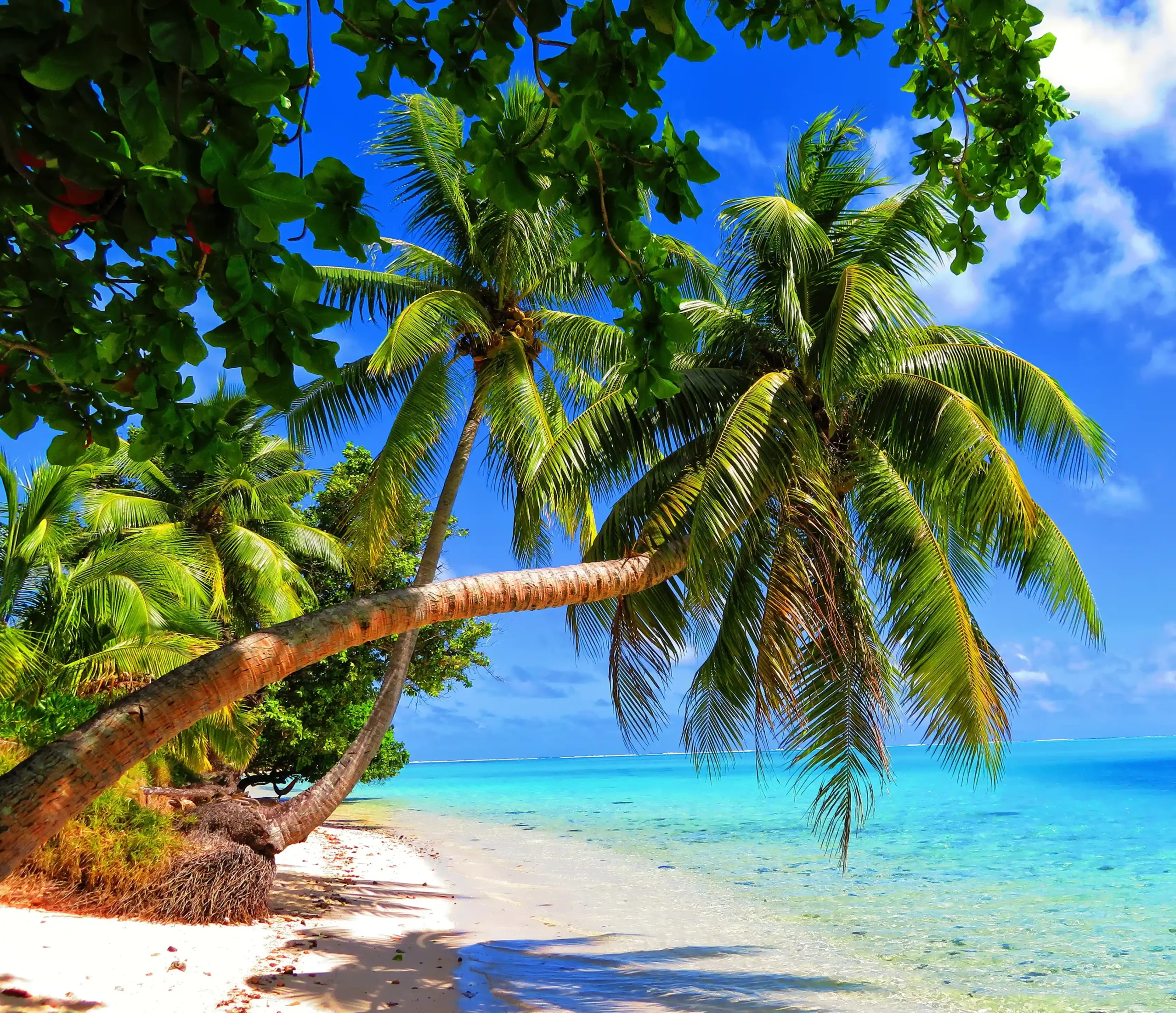


Tahiti rises from the Pacific like a dream half‑remembered, a place where the boundary between the real and the mythical feels thin enough to touch. The island breathes with a slow, ancient rhythm: the pulse of waves against black‑sand shores, the whisper of palms bending toward the sea, the distant murmur of waterfalls hidden deep within emerald valleys. Everything here seems shaped by softness and fire at once, as if the land still carries the memory of its volcanic birth.
Morning arrives gently on Tahiti. A pale gold light spills over the mountains, revealing ridges wrapped in mist like veils of silk. The air is warm even at dawn, scented with tiare blossoms whose fragrance drifts through villages and gardens like a quiet blessing. Roosters call from somewhere in the hills, and the lagoon begins to glow with impossible shades of turquoise and jade. In these early hours, the island feels untouched, suspended in a moment before the world fully wakes.
As the sun climbs higher, Tahiti becomes a tapestry of movement and color. Fishermen guide their outrigger canoes across the lagoon, their paddles slicing the water with practiced grace. Children race along the shore, leaving fleeting footprints in the volcanic sand. In the markets, piles of mangoes, papayas, and breadfruit create a mosaic of tropical hues, while artisans carve patterns into wood that echo the ancient stories of their ancestors. Life unfolds slowly, but with intention, as if every gesture is part of a larger harmony.
Inland, the island reveals a wilder heart. Narrow paths wind through forests where giant ferns unfurl like green spirals and the air hums with the sound of unseen insects. Waterfalls plunge from cliffs draped in vines, their spray catching the sunlight in brief, shimmering arcs. The mountains rise steep and dramatic, their slopes carved by centuries of rain into deep folds and shadowed ravines. Here, the silence feels sacred, broken only by the distant rush of water or the call of a bird hidden in the canopy.
Evening brings a different kind of magic. The sky turns molten orange, then fades into a deep violet that seems to swallow the horizon. The ocean reflects every shade, becoming a mirror for the dying light. As darkness settles, the island glows with small fires and lanterns, and the rhythmic beat of drums drifts through the warm night air. Dancers move with fluid, hypnotic grace, their silhouettes flickering like spirits in the firelight. The stories they tell through movement feel older than memory, rooted in the island’s soul.
Tahiti at night is a world of stars. The sky stretches wide and clear, revealing constellations that guided ancient navigators across the ocean. The air cools slightly, carrying the scent of flowers and the salt of the sea. Waves continue their endless conversation with the shore, steady and reassuring. In this quiet, the island feels timeless, as if it exists outside the rush of ordinary life.
To stand on Tahiti is to feel both small and deeply connected—to the land, to the ocean, to the long lineage of people who have loved this place. It is an island that invites you not just to see it, but to breathe with it, to let its rhythm settle into your bones. And long after you leave, the memory of its light, its fragrance, its gentle warmth lingers like a soft echo, calling you back across the water.