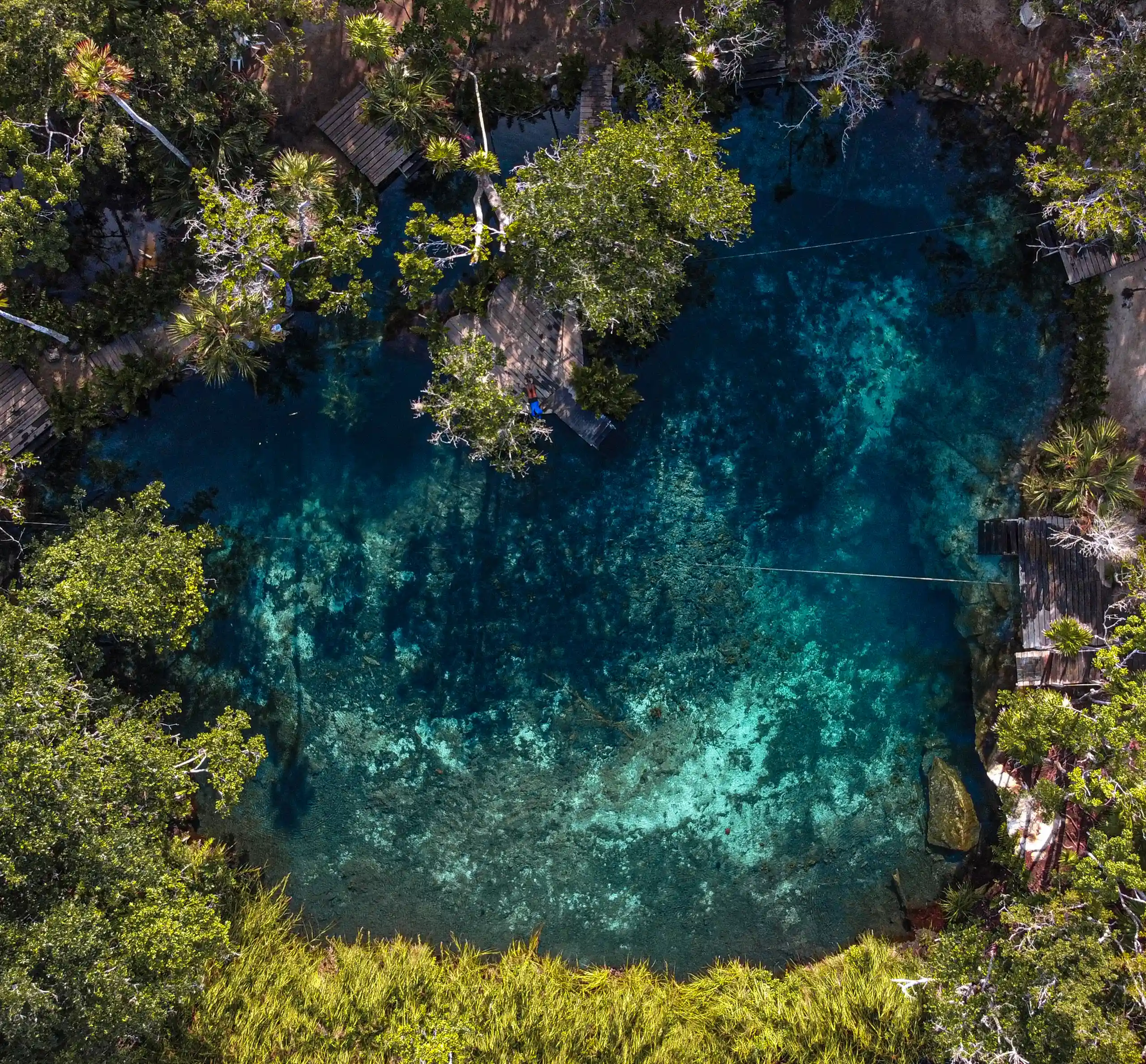


The Subterranean Wonders: A Guide to Tulum’s Cenotes
Tulum is world-renowned not only for its bohemian beaches and Mayan ruins but also for being the gateway to the world’s most extensive underground river systems. Cenotes (from the Mayan word d’zonot) are natural sinkholes resulting from the collapse of limestone bedrock, exposing groundwater underneath. For the ancient Maya, these were sacred portals to Xibalba, the underworld.
Top Cenotes Near Tulum: At a Glance
The following table summarizes the most iconic cenotes located within a 20-minute drive from Tulum’s town center.
| Cenote Name | Type | Best For | Vibe |
|---|---|---|---|
| Gran Cenote | Semi-open | Snorkeling & Turtles | Iconic, can get crowded |
| Dos Ojos | Cave/Cavern | Scuba Diving | Dramatic light & Stalactites |
| Calavera | Sinkhole | Adventure/Jumping | Social, “The Skull” look |
| Casa Cenote | Open/River | Kayaking & Families | Mangroves, emerald water |
| Sac Actun | Underground | Cave Tours | Mysterious, otherworldly |
Deep Dive into the Favorites
Gran Cenote: The Garden of Eden
Located on the road to Cobá, Gran Cenote is perhaps the most famous in the region. It features a mix of open-air swimming areas and cavernous overhangs connected by wooden boardwalks.
- Wildlife: Look for small turtles swimming alongside you.
- The Experience: Crystal-clear water with high visibility makes it a photographer’s dream.
Cenote Dos Ojos: The Diver’s Paradise
Part of the Sistema Dos Ojos, this site consists of two circular sinkholes connected by a 400-meter cavernous passage.
- The “Eyes”: The “Blue Eye” is bright and sunny; the “Black Eye” is dark and requires a guide.
- Why Visit: It offers some of the best cavern diving in the world, with visibility often exceeding 100 meters.
Cenote Calavera: The Temple of Doom
Located just outside of town, Calavera (meaning “Skull”) is famous for its three holes in the ground that resemble a face.
- The Thrill: You can jump 3 meters down into the deep water through the “eyes” of the skull.
- The Swing: A famous wooden swing inside the main opening is a staple for social media enthusiasts.
Practical Traveler Information
To ensure a smooth trip to these natural wonders, keep the following requirements in mind:
- Strict Eco-Rules:
- No Sunscreen: Traditional sunscreens (even “biodegradable” ones) are often banned to protect the fragile ecosystem.
- Showers: Most cenotes require you to take a quick rinse before entering.
- Costs and Cash:
- Entrance fees range from $200 to $600 MXN (approx. $12–$35 USD).
- Most cenotes are Cash Only. Credit cards are rarely accepted deep in the jungle.
- Best Time to Visit:
- Arrive at 8:00 AM to have the water to yourself. By 11:00 AM, tour buses from Cancun and Playa del Carmen typically arrive.
The Cultural and Spiritual Significance
The importance of these sites cannot be overstated. As noted by explorers and historians:
“The cenotes were the lifeblood of the Mayan civilization. Beyond being their only source of fresh water in a land with no surface rivers, they were the spiritual heart of the community—a bridge between the physical world and the divine.”
Summary Checklist for Your Visit
Before you grab your towel, make sure you have:
- Biodegradable bug spray (to use after you leave the water).
- Snorkel gear (rentals are available but can be pricey).
- GoPro or waterproof housing for stunning underwater shots.
- Water shoes (the limestone rocks can be very sharp and slippery).
Whether you are looking for a spiritual connection to Mayan history or a refreshing dip to escape the Mexican heat, the cenotes of Tulum offer an experience found nowhere else on Earth.