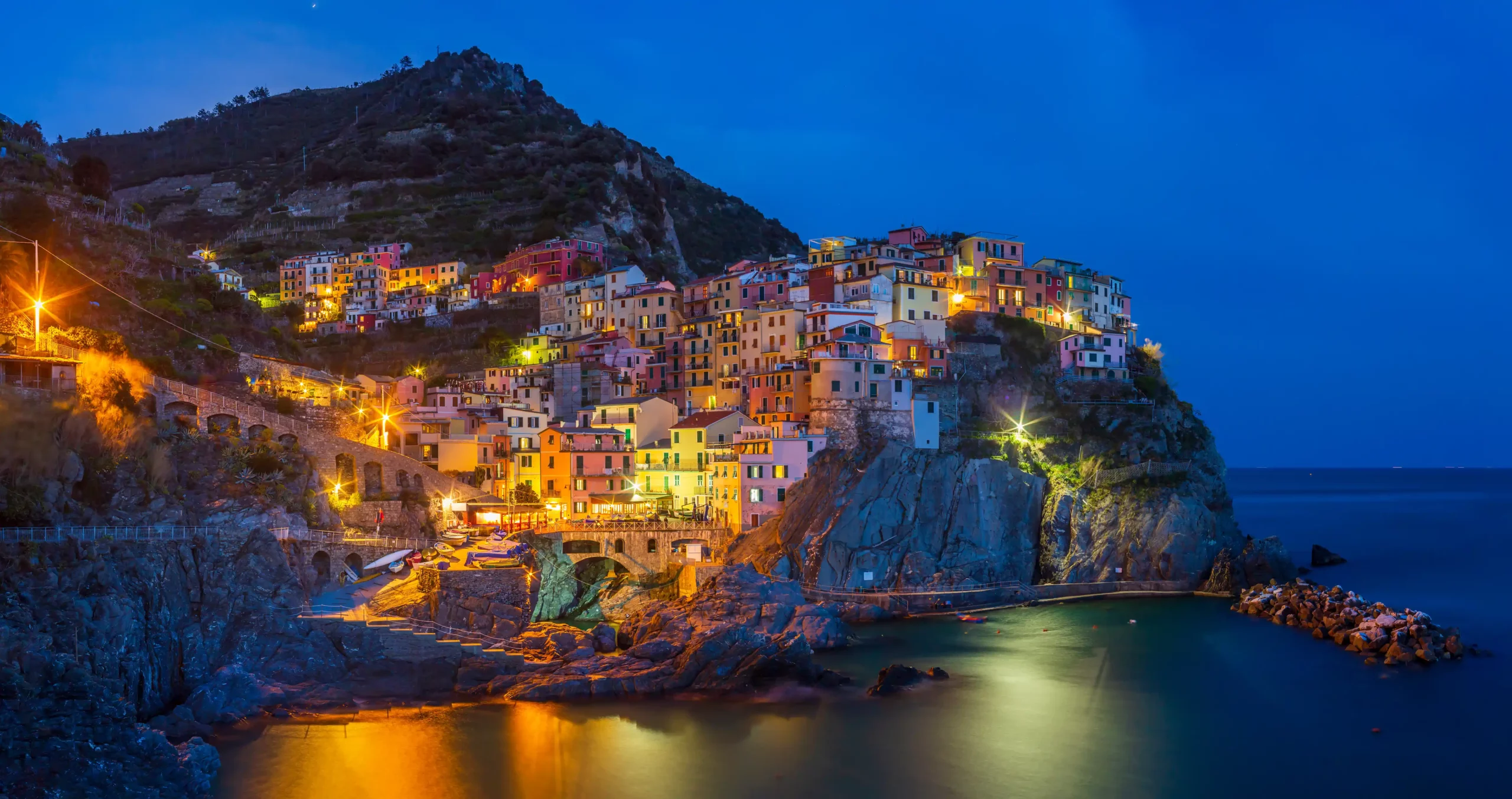


Cinque Terre is a coastal area in the Liguria region of northwestern Italy, recognized as a UNESCO World Heritage Site for its cultural landscape and the long‑standing interaction between people and a dramatic natural environment. It consists of five historic villages—Monterosso al Mare, Vernazza, Corniglia, Manarola, and Riomaggiore—built along steep cliffs overlooking the Ligurian Sea. The region is noted for its terraced hillsides, traditional architecture, and a millennium of agricultural adaptation.
Geography and setting
Cinque Terre occupies a rugged stretch of the Italian Riviera characterized by steep cliffs, narrow coves, and terraced slopes supported by dry‑stone walls. These terraces were created over centuries to cultivate vineyards and olive groves despite the challenging terrain. The villages developed in relative isolation due to the steep landscape, which shaped their compact layouts and reliance on maritime routes. The area covers more than 4,500 hectares and forms part of a larger UNESCO‑protected zone that includes Portovenere and the islands of Palmaria, Tino, and Tinetto.
Wikipedia UNESCO World Heritage Centre
Cultural and historical significance
Cinque Terre is classified by UNESCO as a cultural landscape because it reflects a continuous exchange between human activity and the natural environment. The villages demonstrate traditional building techniques, terraced agriculture, and settlement patterns that have persisted for centuries. UNESCO highlights the region as an example of how communities adapted architecture, land use, and infrastructure to overcome steep, uneven terrain while maintaining a cohesive cultural identity.
Economic and social traditions
Historically, the villages relied on fishing and agriculture, especially viticulture. The terraced vineyards produce distinctive local wines, including the well‑known Sciacchetrà. Fishing traditions remain visible in the small harbors and local cuisine, which features anchovies, seafood, and regional olive oil. Despite modern tourism, these practices continue to play a role in local life and contribute to the region’s cultural continuity.
Tourism and preservation
Cinque Terre has become one of Italy’s most visited destinations, attracting travelers with its dramatic scenery, colorful houses, and extensive hiking paths. The Sentiero Azzurro, a coastal trail linking the villages, is among the most popular routes. Tourism brings economic benefits but also challenges, including environmental pressure and the need to preserve traditional structures. The national park and UNESCO designation support conservation efforts aimed at balancing visitor access with long‑term sustainability.
Key characteristics in structured form
| Aspect | Description |
|---|---|
| Location | Liguria, northwest Italy |
| UNESCO status | Cultural landscape, inscribed in 1997 |
| Villages | Monterosso, Vernazza, Corniglia, Manarola, Riomaggiore |
| Landscape features | Terraced hillsides, steep cliffs, coastal coves |
| Cultural elements | Fishing heritage, viticulture, traditional architecture |
| Notable products | Local white wines, Sciacchetrà, seafood dishes |
| Main activities | Hiking, coastal exploration, cultural tourism |
Additional overview table
| Theme | Details |
|---|---|
| Historical development | Evolved as isolated fishing and farming communities |
| Agricultural adaptation | Terraces built over centuries to cultivate steep slopes |
| Architectural style | Tall, narrow, colorful houses clustered along cliffs |
| Environmental challenges | Erosion, landslides, tourism pressure |
| Preservation efforts | National park management, UNESCO protection |